What Are Black Holes?
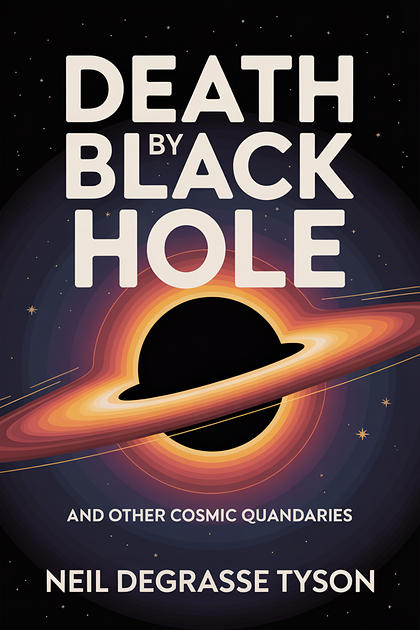
Black holes are stellar objects so massive that their gravity prevents everything, including light, from escaping. This extreme phenomenon happens when a massive star runs out of nuclear fuel and collapses under its own weight. Albert Einstein’s general theory of relativity provides the foundational mathematics for understanding these dark objects. While the theory was first proven by observing how planets move, it also accurately predicts what happens in the intense gravity near a collapsed star.
The absolute boundary of a black hole is called the *horizon*. When gas atoms from space are pulled toward a black hole, they accelerate to immense speeds and heat up violently. Far away, they emit radio waves, while closer in, they glow with visible light and high-energy X-rays. The horizon acts as a one-way filter where anything passing below it can never return, making the hole appear perfectly black to the outside universe.
The physical properties of a black hole are surprisingly simple. They are determined by only three factors: mass, spin, and electrical charge. Because black holes neutralize their charge by pulling in opposite particles from surrounding gas, they are primarily defined by their mass and how fast they rotate. If a hole spins, it drags the fabric of space around it in a swirling motion that forces any nearby object to circulate with it.
Gravity near these objects distorts both geometry and time. An observer watching something fall into a black hole would never actually see it cross the horizon because the escaping light becomes increasingly redder and fainter. To the person falling, however, the passage through the horizon happens in an instant. The most destructive force near a black hole is tidal gravity, which stretches objects like taffy, eventually pulling them toward a central point of infinite density called a *singularity*.
Full summary available in the Readsome app