Introduction: How Society Shapes Our Common Sense
We navigate our daily lives using a set of unwritten rules we call common sense. It organizes our sight, sound, and touch into a meaningful reality. This practical consciousness allows us to operate on autopilot and navigate social situations without relearning the rules of conduct every morning. It only becomes visible when someone breaks the script, like a speaker yelling at an audience to disrupt a formal lecture.
The danger of common sense is that it feels like a natural law, much like gravity. We often forget that these social rules are human-made through a process called structuration. We build the walls of our social world and then treat them as if they were always there. If you can convince people that the current way of the world is the only sensible way, you do not need to use force to control them, achieving hegemony or rule by consent.
The American Dream is a perfect example of this invisible system. It tells us that if you work hard and play by the rules, you will succeed. It frames success as a personal merit and failure as a personal fault. This narrative conveniently hides the structural hurdles that make the playing field uneven, ignoring the fact that many inherit millions while others start with nothing. By making success an individual burden, the system protects itself from being questioned.
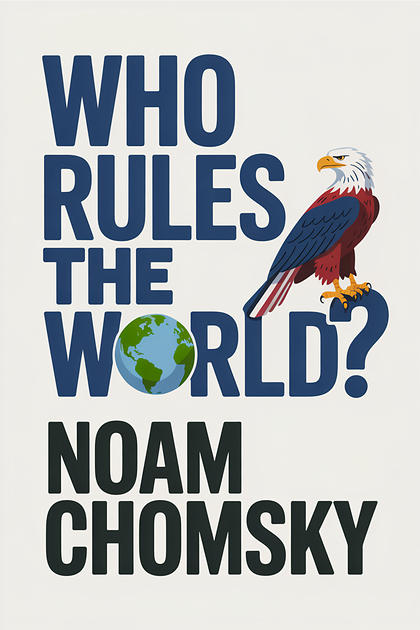
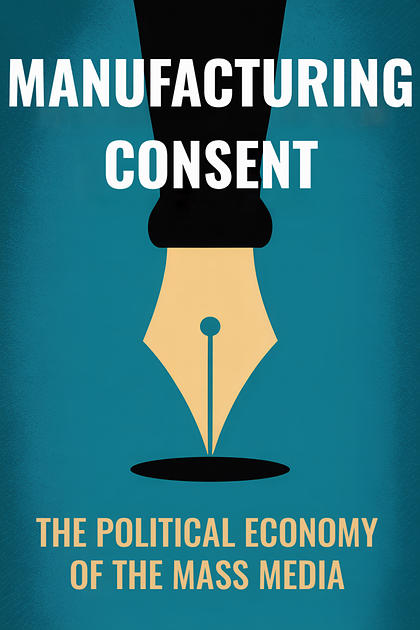
Power in a free society relies on the engineering of consent. As early pioneers of public relations pointed out, the minds of the masses are molded by people we have never heard of. Today, six major corporations control nearly everything we read, watch, or listen to. Their goal is not to inform us, but to sell our attention to advertisers. They set the boundaries of acceptable debate, creating a news environment that prioritizes political drama over deep policy issues.
This control of information leads to a society trained to forget inconvenient histories that contradict our benevolent national image. For instance, the brutal wars in Central America during the 1980s are largely erased from public memory. We ignore that the refugees currently fleeing to our borders are often escaping the wreckage of our own past foreign policies. Because these facts do not fit the common sense narrative of our national identity, they become literally unthinkable.
Breaking this cycle requires us to move from practical consciousness to a critical, discursive one. We must realize that common sense is not a stable truth but a field of struggle. By questioning the rules we take for granted, we open up the possibility of imagining a different reality. Radical change only begins when we develop a new common sense that allows us to see the world as it truly is, rather than how we are told it must be.
Full summary available in the Readsome app